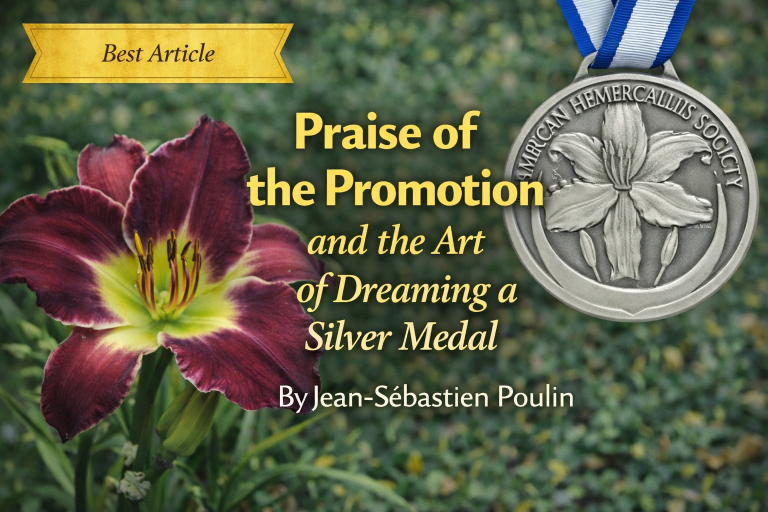
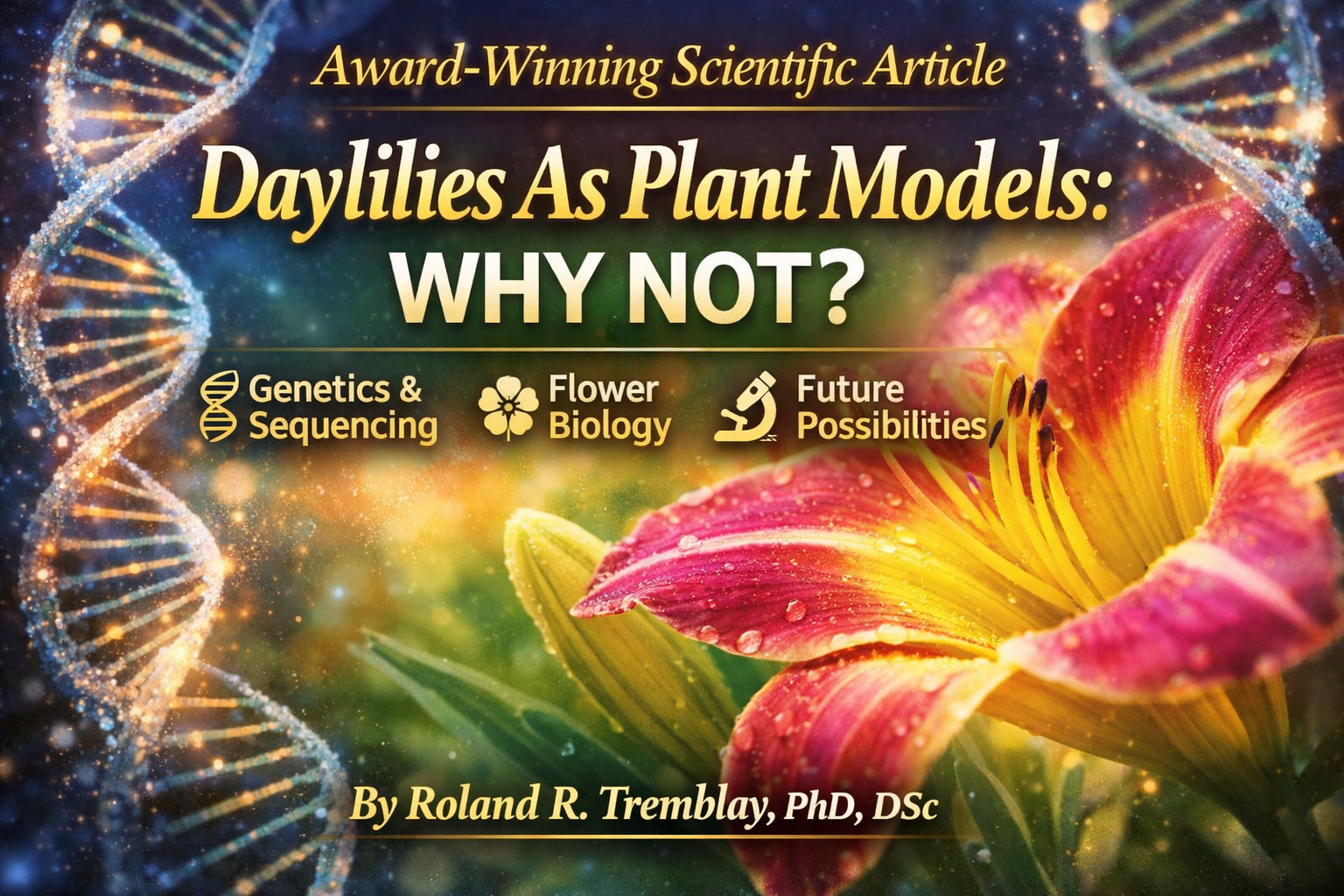
Best Scientific Article “Daylilies as Plant Models – Why not?” by Roland R. Tremblay – Fall 2014
In this award-winning scientific article, Roland R. Tremblay explores a big idea: daylilies can serve as powerful plant “model” organisms for understanding how plants grow, bloom, express color, and age, especially now that modern sequencing tools are advancing rapidly.
You don’t need to be a scientist to enjoy it. If you’re a gardener, hybridizer, or just curious about what’s happening “under the hood” in a daylily, this piece connects real biology to the traits we all notice in the garden.
What you learn,
- Why the daylily genome is both challenging and exciting and why new sequencing technology changes what’s possible.
- Where different types of genes “show up” in the plant (foliage vs. tepals vs. roots) and what that suggests.
- Why flower color can be more complex than “one gene = one outcome”, including the role of alternative splicing and epigenetic effects.
- The “life and death” of a daylily bloom: what drives rapid opening, peak form, then the fast breakdown that follows.
- Future-facing possibilities that could matter to hybridizers and researchers like longer-lasting blooms, stronger fragrance, and new biochemical discoveries.